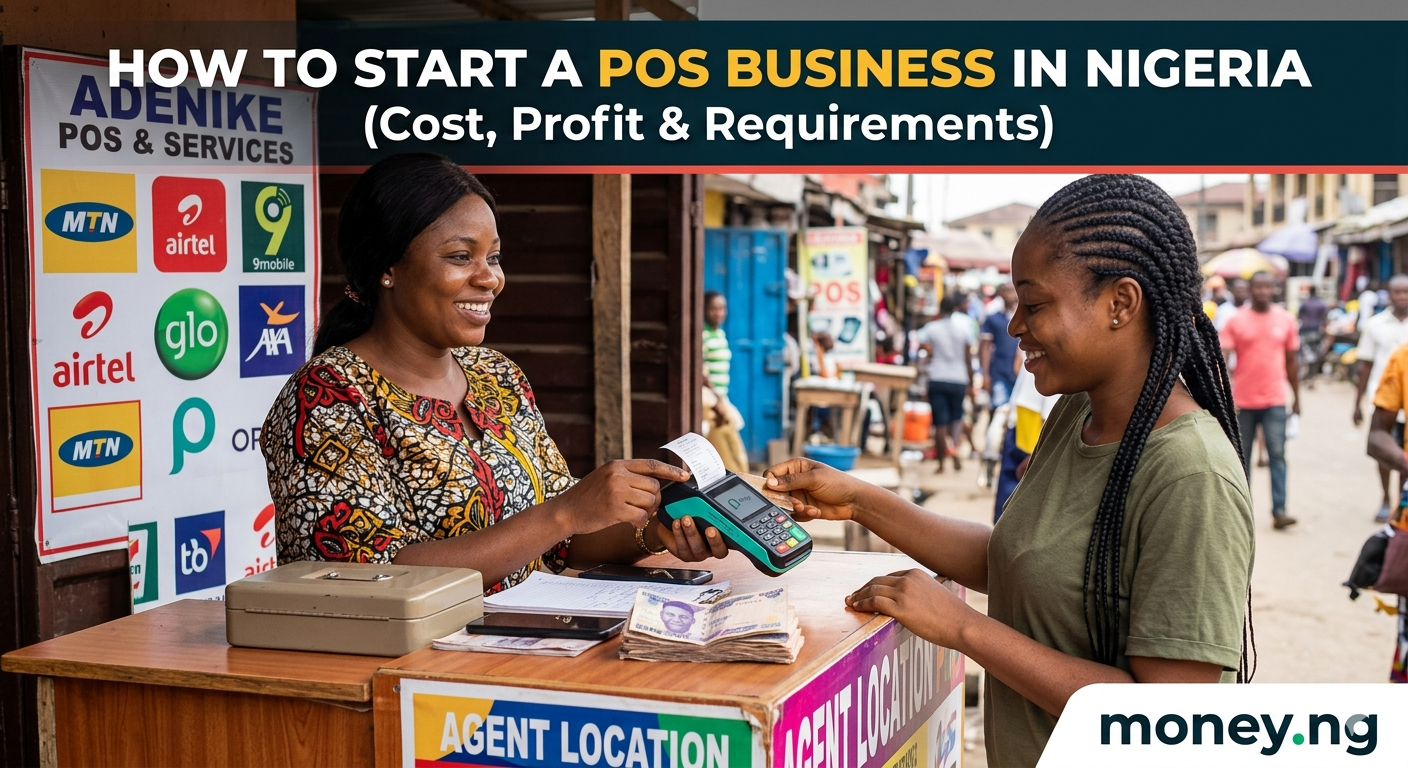
The POS (Point-of-Sale) business has become one of the most popular small businesses in Nigeria. With many people relying on POS agents for quick cash withdrawals, transfers, and bill payments, the demand for these services continues to grow across cities and rural communities.
For entrepreneurs looking for a low-capital business with daily cash flow, starting a POS business can be a profitable option.
In this guide, you will learn how to start a POS business in Nigeria, the startup costs and requirements, and how much profit POS agents can make.
Table of Contents
What Is a POS Business?
A POS business involves providing financial services such as:
- cash withdrawals
- money transfers
- bill payments
- airtime purchases
Customers use POS agents when:
- ATMs are not available
- banks are crowded
- they need quick transactions
Because of this convenience, POS agents are now common across Nigeria.
Many POS transactions are linked to mobile banking services. If you want to understand how mobile transactions compare to USSD banking, see “Mobile Banking vs USSD in Nigeria: Which Is Safer and Cheaper?”
Why POS Businesses Are Popular in Nigeria
Several factors have contributed to the rapid growth of POS businesses:
1. Limited ATM Availability
Many areas in Nigeria have few working ATMs, making POS agents an easier option for cash withdrawals.
2. Banking Convenience
Customers prefer POS agents because transactions are often faster than visiting a bank branch.
3. Growing Digital Payments
More Nigerians now use mobile transfers and digital banking services.
However, when handling financial transactions, it is important to stay aware of fraud risks. Learn how to protect yourself in “Common Financial Scams in Nigeria and How to Avoid Them.”
Requirements to Start a POS Business
Starting a POS business requires only a few basic things.
1. POS Machine
You must obtain a POS machine from a bank or fintech company.
Common providers include:
- First Bank of Nigeria
- Access Bank
- United Bank for Africa
These institutions usually provide POS terminals to registered agents.
2. Registered Bank Account
You need an active Nigerian bank account to receive transaction funds.
If you are unsure which bank to choose, see “Best Banks in Nigeria (2026 Review).”
3. Business Location
Location is one of the most important factors in POS business success.
Good locations include:
- markets
- residential areas
- busy streets
- university campuses
Areas with limited ATMs often perform best.
4. Startup Capital
POS agents must maintain cash and account balances to process transactions.
You need enough capital to handle customer withdrawals and transfers.
Cost of Starting a POS Business in Nigeria
Startup costs vary depending on the provider and location.
| Item | Estimated Cost |
|---|---|
| POS machine | ₦0 – ₦100,000 |
| Shop or kiosk | ₦20,000 – ₦100,000 |
| Signboard and setup | ₦10,000 – ₦30,000 |
| Startup cash | ₦50,000 – ₦200,000 |
Estimated total startup cost:
₦80,000 – ₦300,000.
Some fintech companies provide POS machines for free but deduct commissions from transactions.
How POS Agents Make Money
POS agents earn money through transaction fees charged to customers.
Typical charges include:
| Service | Typical Fee |
|---|---|
| Cash withdrawal | ₦100 – ₦300 |
| Money transfer | ₦50 – ₦100 |
| Bill payment | ₦50 – ₦100 |
If a POS agent processes 30–50 transactions per day, the daily profit can range between:
₦3,000 – ₦10,000 depending on location and traffic.
Step-by-Step: How to Start a POS Business
Step 1: Choose a POS Provider
Register with a bank or fintech POS provider.
Step 2: Submit Registration Documents
Common documents required include:
- valid ID card
- bank account details
- passport photograph
- phone number
Step 3: Receive Your POS Machine
After approval, you will receive the POS device.
Step 4: Fund Your Account
Deposit funds to process transactions for customers.
Step 5: Start Processing Transactions
Once your POS machine is active, you can begin serving customers immediately.
Risks in the POS Business
Although profitable, the POS business has some risks.
Fraudulent Transfers
Sometimes, customers attempt fraudulent transactions.
If money is deducted from an account but not received, follow the steps explained in “What To Do If Money Is Debited But Not Received in Nigeria.”
Account Restrictions
Banks may temporarily freeze accounts if suspicious transactions occur.
If this happens, see “Why Nigerian Banks Freeze Accounts (And How to Avoid It).”
Security Risks
POS agents handle large amounts of cash daily, which can attract theft.
Safety measures include:
- operating in busy areas
- installing CCTV cameras
- avoiding late-night operations
Tips for Running a Successful POS Business
To succeed as a POS agent:
- choose a high-traffic location
- maintain enough cash for withdrawals
- provide quick customer service
- keep transaction records
- monitor your account regularly
These steps can help build trust and attract repeat customers.
Frequently Asked Questions
How much capital is needed to start a POS business in Nigeria?
Most people start with ₦100,000 to ₦300,000, depending on equipment and location.
Is the POS business profitable?
Yes. A busy POS agent can earn ₦90,000 to ₦300,000 per month, depending on transaction volume.
Do banks provide free POS machines?
Some banks and fintech companies provide POS machines at no upfront cost but charge commissions.
Can POS agents perform money transfers?
Yes. POS agents can send and receive transfers, withdraw cash, and process bill payments.
Conclusion
The POS business has become one of the easiest small businesses Nigerians can start with relatively low capital. With increasing demand for convenient financial services, POS agents play an important role in providing access to banking services in many communities.
By choosing a good location, maintaining sufficient transaction funds, and providing reliable service, a POS business can generate consistent daily income and grow into a sustainable source of revenue.