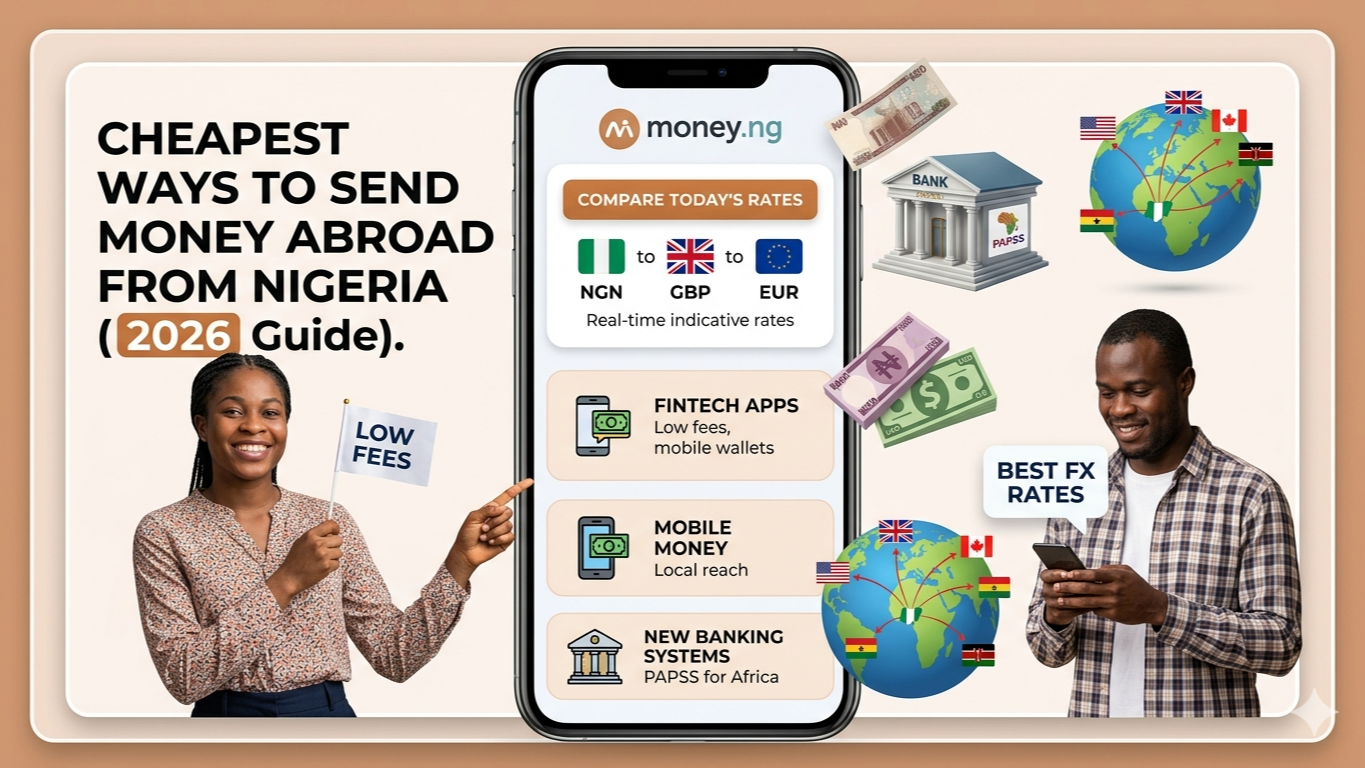
Sending money abroad from Nigeria is common for many people today. Nigerians transfer funds internationally for family support, business payments, education fees, and online services. However, international transfers can be expensive if you use the wrong method.
Banks and money transfer platforms often charge transfer fees, currency conversion costs, and service charges, which can significantly increase the total amount you pay.
This guide explains the cheapest ways to send money abroad from Nigeria, the options available, and how to avoid unnecessary fees.
Table of Contents
Why International Transfers Can Be Expensive
When sending money abroad, the total cost usually includes:
- transfer service fees
- exchange rate markup
- intermediary bank charges
- receiving bank fees
Many Nigerians do not realize how much they pay in hidden banking charges. To understand more about these fees, see “Hidden Bank Charges Nigerians Pay Without Knowing.”
Choosing the right transfer method can help you reduce these costs significantly.
1. International Bank Transfer (Wire Transfer)
Traditional bank wire transfers remain one of the most common ways to send money abroad from Nigeria.
Major banks that support international transfers include :
- Guaranty Trust Bank
- Access Bank
- Zenith Bank
These banks allow customers to transfer foreign currency directly to international accounts.
Pros
- secure and widely accepted
- suitable for large transfers
Cons
- higher fees than fintech services
- slower processing times
If you are considering which banks provide the best international banking services, see “Best Banks in Nigeria (2026 Review).”
2. Using a Domiciliary Account
A domiciliary account allows you to hold and transfer foreign currencies such as dollars, euros, or pounds.
With a domiciliary account, you can send international transfers without converting money into naira first.
Benefits include:
- lower currency conversion costs
- easier international transfers
- ability to hold foreign currencies
If you do not already have one, learn how to open one in “How to Open a Domiciliary Account in Nigeria (Dollar, Pound & Euro).”
3. Fintech Payment Platforms
Fintech companies have made international transfers faster and sometimes cheaper than traditional banks.
Popular payment platforms used by businesses include:
- Paystack
- Flutterwave
These platforms allow online businesses to process international payments and send funds globally.
If you want a comparison of these platforms, read “Paystack vs Flutterwave: Fees, Differences, and Which to Use.”
4. International Money Transfer Services
Global money transfer services allow Nigerians to send money internationally without visiting a bank branch.
These services often provide:
- faster transfers
- mobile app access
- competitive exchange rates
However, it is important to compare fees and exchange rates before choosing a provider.
5. Sending Payments Through International Clients
Freelancers and remote workers sometimes receive international payments instead of sending them.
When working with foreign clients, it is important to use trusted payment methods.
To understand the best options available, see “How Nigerians Can Receive Foreign Payments Without Issues.”
Tips to Reduce International Transfer Fees
To minimize costs when sending money abroad:
Compare Exchange Rates
Some providers charge hidden margins in exchange rates.
Avoid Multiple Transfers
Sending one larger transfer may cost less than several small transfers.
Use Foreign Currency Accounts
Domiciliary accounts help reduce conversion charges.
Verify Payment Platforms
Always use trusted financial platforms to avoid fraud.
If you frequently deal with international transactions, understanding financial scams is important. Read “Common Financial Scams in Nigeria and How to Avoid Them.”
Common Problems When Sending Money Abroad
Even when using trusted platforms, some issues may occur.
Transaction Delays
International transfers sometimes take several days due to verification checks.
Bank Restrictions
Banks may temporarily restrict accounts if they detect unusual activity.
If this happens, see “Why Nigerian Banks Freeze Accounts (And How to Avoid It).”
Failed Transactions
Sometimes money may be debited but not received by the recipient. In that case, follow the steps explained in “What To Do If Money Is Debited But Not Received in Nigeria.”
Frequently Asked Questions
What is the cheapest way to send money abroad from Nigeria?
Fintech payment platforms and domiciliary accounts are often cheaper than traditional bank wire transfers.
How long do international transfers take?
Transfers may take 1–5 business days, depending on the bank and country.
Can Nigerians send money abroad online?
Yes. Many banks and fintech platforms allow international transfers through mobile apps or online banking.
Do Nigerian banks charge international transfer fees?
Yes. Fees vary depending on the bank and the amount being transferred.
Conclusion
Sending money abroad from Nigeria does not have to be expensive. By choosing the right transfer method—such as fintech payment platforms, domiciliary accounts, or competitive international transfer services—you can significantly reduce fees and improve transaction speed.
Before sending money internationally, always compare transfer charges, exchange rates, and processing times. Selecting the most cost-effective option will help you save money while ensuring your funds reach their destination safely.