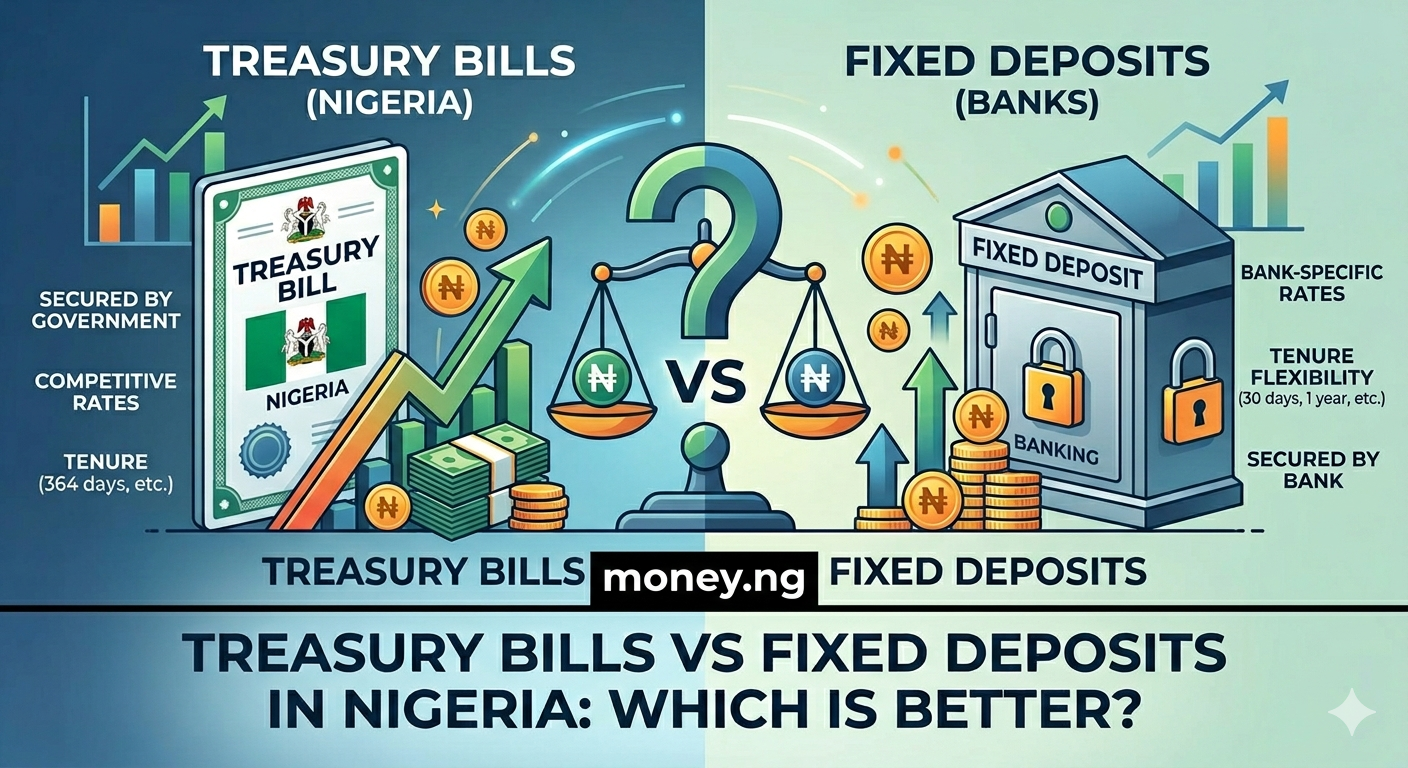
If you’re looking for low-risk ways to grow your money in Nigeria, two of the most popular options are Treasury Bills (T-Bills) and Fixed Deposits. Both are widely used by individuals who want better returns than a normal savings account while keeping their money relatively safe.
But which one is better?
In this guide, we compare Treasury Bills vs Fixed Deposits in Nigeria, including how they work, expected returns, risks, and which option is best for different types of investors.
Table of Contents
What Are Treasury Bills?
Treasury Bills (T-Bills) are short-term government securities issued by the Central Bank of Nigeria (CBN) on behalf of the federal government.
When you buy treasury bills, you are essentially lending money to the Nigerian government, and in return, you receive interest.
Treasury bills usually have three maturity periods:
- 91 days
- 182 days
- 364 days
At maturity, investors receive the original investment plus interest.
Because they are backed by the government, treasury bills are considered one of the safest investments in Nigeria.
What Is a Fixed Deposit Account?
A fixed deposit (FD) is a type of bank investment where you deposit money for a fixed period and earn interest.
Common tenure options include:
- 30 days
- 90 days
- 180 days
- 1 year or more
During this period, the bank holds your funds and pays a pre-agreed interest rate.
If you withdraw before the maturity date, you may lose some or all of the interest.
If you’re exploring savings options beyond traditional banks, you may also want to read Best Investment Apps in Nigeria for Beginners on Money.ng.
Treasury Bills vs Fixed Deposits: Key Differences
| Feature | Treasury Bills | Fixed Deposits |
|---|---|---|
| Issuer | Nigerian Government | Commercial Banks |
| Risk Level | Very low | Low |
| Interest Rate | Usually competitive | Often lower |
| Minimum Investment | Often ₦50,000+ | Varies by bank |
| Liquidity | Can be traded in secondary market | Locked until maturity |
Both options are low-risk investments, but they serve slightly different financial goals.
Interest Rates and Returns
Returns are one of the biggest factors when choosing between treasury bills and fixed deposits.
Treasury Bills
Treasury bill yields fluctuate depending on government monetary policy and inflation. In many periods, they offer higher returns than bank deposits.
Interest is usually paid as a discount at purchase, meaning you buy the bill below its face value and receive the full value at maturity.
Fixed Deposits
Fixed deposit interest rates depend on:
- The bank
- Deposit amount
- Investment tenure
Banks may offer better rates for larger deposits or longer tenures.
However, fixed deposit rates in Nigeria are often lower than treasury bill yields.
If you’re comparing interest-based savings options, see How Much Interest Do Nigerian Savings Apps Really Pay? on Money.ng.
Risk Comparison
Both treasury bills and fixed deposits are considered low-risk investments, but there are some differences.
Treasury Bills Risk
Treasury bills are backed by the Federal Government of Nigeria, making them one of the safest financial instruments available.
The main risk is inflation reducing the real value of returns.
Fixed Deposit Risk
Fixed deposits depend on the financial stability of the bank.
While Nigerian banks are regulated, the risk is still slightly higher than government securities.
Liquidity and Access to Funds
Liquidity refers to how easily you can access your money.
Treasury Bills
Treasury bills can be sold in the secondary market before maturity, though the price may vary depending on market conditions.
This provides some flexibility if you need cash early.
Fixed Deposits
Fixed deposits are usually locked until maturity.
Early withdrawal may lead to:
- Loss of interest
- Penalty charges
If liquidity is important to you, treasury bills may be the better option.
Which Investment Is Better in Nigeria?
The best option depends on your financial goals.
Treasury Bills Are Better If:
- You want government-backed security
- You want potentially higher returns
- You may need to sell before maturity
Fixed Deposits Are Better If:
- You prefer simple bank investments
- You want a predictable interest rate
- You already have a strong relationship with your bank
Alternative Low-Risk Investment Options
Apart from treasury bills and fixed deposits, Nigerians are increasingly using digital savings platforms and fintech investment apps.
Some of these apps offer competitive interest rates and flexible savings options.
You can explore them in Best Investment Apps in Nigeria for Beginners on Money.ng.
Also, if you are saving in foreign currency, consider reading Best Dollar Accounts for Nigerians (2026 Guide).
Frequently Asked Questions
Are treasury bills better than fixed deposits?
Treasury bills often provide higher returns and government backing, making them attractive for conservative investors.
What is the minimum amount for treasury bills in Nigeria?
The minimum investment is usually ₦50,000 through banks, although institutional investors often invest much larger amounts.
Can individuals buy treasury bills?
Yes. Individuals can buy treasury bills through:
- Commercial banks
- Investment firms
- Online investment platforms
Are treasury bills taxable in Nigeria?
Treasury bill returns are generally tax-free for individual investors, which increases their attractiveness compared to some bank investments.
Conclusion
Both treasury bills and fixed deposits are safe investment options for Nigerians who want stable returns with minimal risk.
However, treasury bills often offer higher yields, government backing, and more flexibility, making them a preferred option for many investors.
Fixed deposits remain useful for individuals who prefer simple bank-based investments with guaranteed interest rates.
Before investing, always compare interest rates, liquidity, and financial goals to choose the best option for your needs.
For more guides, explore other resources on Money.ng, including:
- Best Investment Apps in Nigeria for Beginners
- How Much Interest Do Nigerian Savings Apps Really Pay?
- Best Dollar Accounts for Nigerians (2026 Guide)
These guides can help you make smarter financial decisions and grow your wealth more effectively.