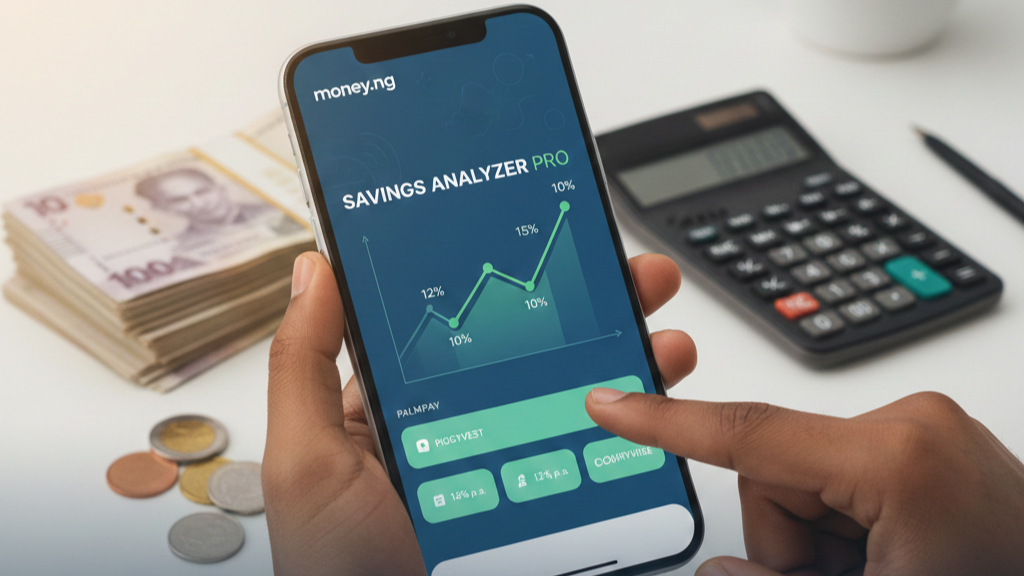
Many Nigerian savings apps advertise attractive interest rates, sometimes far higher than what traditional banks offer. But how much do users actually earn after considering withdrawal rules, lock-in periods, and real-world conditions?
This article breaks down how savings app interest really works in Nigeria, what affects the final amount you earn, and how to avoid common misconceptions. If you are using or planning to use a savings app, this guide will help you make informed decisions.
Table of Contents
How Savings App Interest Works in Nigeria
Unlike traditional banks that often pay minimal interest, savings apps generate returns by:
- Partnering with banks or investment vehicles
- Locking user funds for defined periods
- Lending pooled funds responsibly
- Investing in low-risk financial instruments
Interest is usually calculated annually but credited daily, monthly, or at maturity, depending on the app and savings plan.
Advertised Interest vs Actual Interest
One of the biggest misunderstandings is assuming the headline interest rate equals what you will earn.
In reality:
- The highest rates often apply only to locked savings
- Flexible savings usually earn less
- Early withdrawals may reduce interest
- Interest may be calculated before or after fees
This means two users on the same app can earn very different returns. Best Savings Apps in Nigeria (2026 Review)
Typical Interest Rates Offered by Nigerian Savings Apps
As of recent trends, most Nigerian savings apps fall within these ranges:
- Flexible savings: 6% – 10% per year
- Locked savings: 10% – 15% per year
- Fixed deposits: Depends on duration and amount
Rates can change due to:
- Inflation
- Monetary policy
- Market conditions
- App-specific business decisions
Example: How Much Can You Really Earn?
Let’s assume:
- You save ₦500,000
- Interest rate: 12% per year
- Savings period: 12 months
- No withdrawals
Estimated interest earned:
₦500,000 × 12% = ₦60,000 per year
However:
- If the funds are withdrawn early, interest may drop
- If savings are flexible, returns may be lower
- If interest is calculated daily, compounding matters
Always read the app’s calculation method.
Factors That Affect Your Final Earnings
1. Savings Type
Locked savings earn more than flexible savings.
2. Withdrawal Frequency
Frequent withdrawals reduce effective interest.
3. Duration
Longer savings periods generally earn higher returns.
4. Interest Calculation Method
Daily compounding yields better results than flat calculations.
Are Savings App Interest Rates Guaranteed?
No savings app can guarantee fixed returns indefinitely.
Most platforms:
- Adjust rates based on market conditions
- State that rates are subject to change.
- Clearly outline terms in their savings plans
If an app promises unusually high guaranteed returns without clear explanations, it should be approached cautiously.
Savings Apps vs Traditional Banks: Interest Comparison
Traditional Nigerian banks typically offer:
- 2% – 5% annual interest on savings accounts
Savings apps usually outperform banks because:
- They operate digitally with lower overhead
- They encourage locked savings
- They use alternative investment strategies
However, banks may offer stronger customer support and broader services.
How to Maximize Interest Earnings
To earn more from savings apps:
- Use locked savings for funds you won’t need urgently
- Automate deposits consistently
- Avoid early withdrawals
- Spread savings across short-term and long-term plans
- Reinvest interest when possible. Best Loan Apps in Nigeria (2026 Review)
Frequently Asked Questions (FAQ)
Do Nigerian savings apps pay interest daily?
Some calculate interest daily but credit monthly or at maturity.
Is interest taxed in Nigeria?
Interest income may be subject to withholding tax depending on the structure and regulations.
Which savings app pays the highest interest?
Rates vary, but locked savings plans typically offer the highest returns.
Can interest rates change after I start saving?
Yes. Most platforms reserve the right to adjust rates.
Conclusion
Savings apps in Nigeria can offer significantly better returns than traditional banks, but only when users understand how interest truly works. Advertised rates are not always what you earn in practice.
By choosing the right savings plan, minimizing withdrawals, and committing to longer saving periods, Nigerians can use these platforms to grow their money steadily and responsibly.