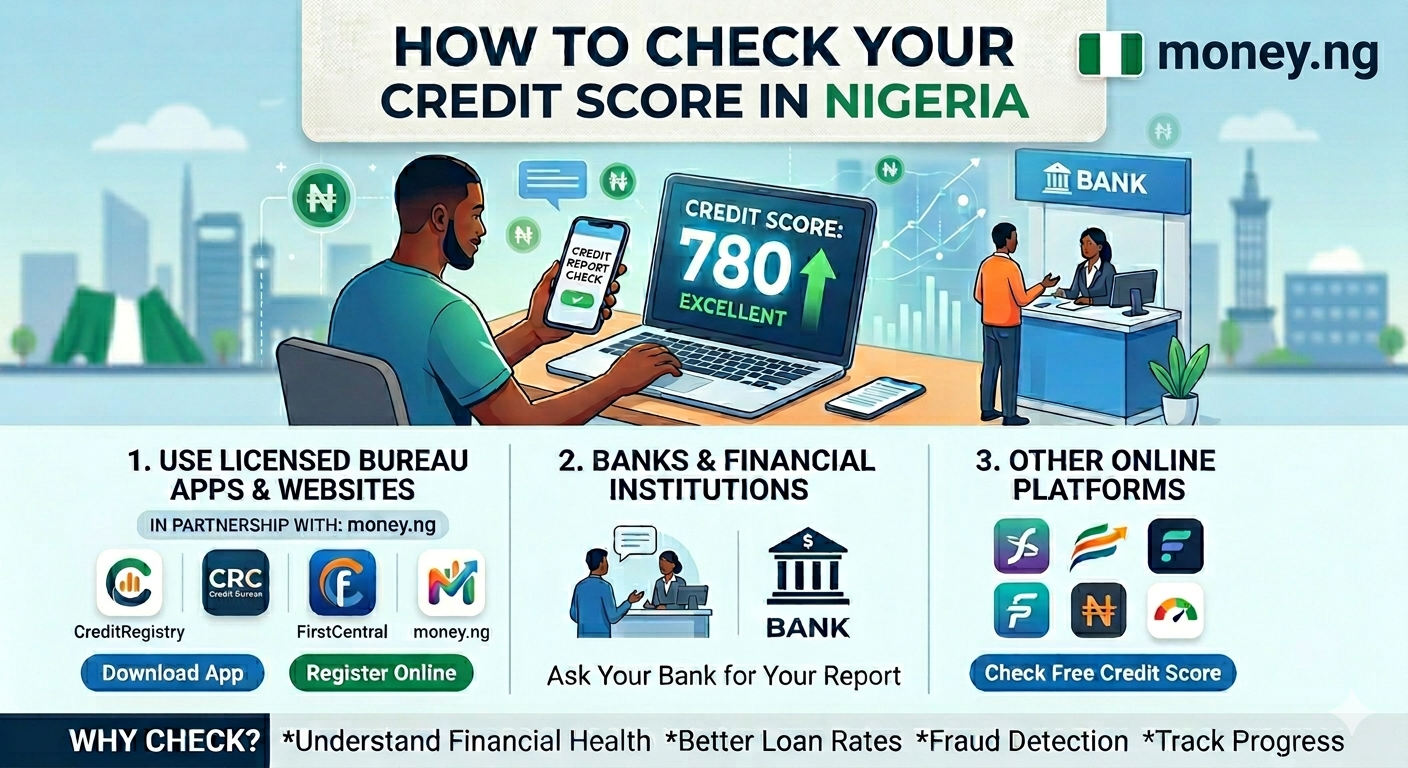
Your credit score plays an important role in determining whether you can access loans, credit cards, and other financial products in Nigeria. Many lenders now rely on credit reports from licensed credit bureaus to assess borrowers before approving loans.
In this guide, you’ll learn how to check your credit score in Nigeria, the credit bureaus that provide it, and why monitoring your credit report matters.
Table of Contents
What Is a Credit Score?
A credit score is a numerical rating that represents how reliable you are when borrowing money.
Lenders use this score to evaluate:
- Your loan repayment history
- Outstanding debts
- Credit usage
- Loan defaults or missed payments
In Nigeria, credit scores typically range from 300 to 850, with higher scores indicating lower lending risk.
A strong credit score makes it easier to qualify for loans, including personal loans and digital lending services.
If you’re exploring borrowing options, you can also read Best Loan Apps in Nigeria (2026 Review) on Money.ng.
Why Your Credit Score Matters in Nigeria
Your credit score can affect several financial decisions.
1. Loan Approval
Banks, fintech lenders, and microfinance institutions often check credit reports before approving loans.
2. Interest Rates
Borrowers with higher credit scores usually get lower interest rates.
3. Access to Financial Products
A good credit profile increases your chances of accessing:
- Personal loans
- Business loans
- Buy-now-pay-later services
- Credit cards
Before taking a loan, it is wise to understand borrowing costs. See our guide on How to Calculate Loan Interest in Nigeria.
Credit Bureaus in Nigeria
Nigeria currently has several licensed credit bureaus regulated by the Central Bank of Nigeria (CBN).
These organizations collect and maintain credit data for lenders.
1. CRC Credit Bureau
One of the most widely used credit bureaus in Nigeria.
Services include:
- Personal credit reports
- Credit monitoring
- Identity verification services
2. FirstCentral Credit Bureau
FirstCentral aggregates credit data from banks, microfinance institutions, and fintech lenders.
They provide:
- Personal credit score reports
- Business credit reports
3. CreditRegistry Nigeria
CreditRegistry is another major credit bureau used by many lenders in Nigeria.
They provide:
- Personal credit reports
- Credit risk analytics
- Consumer credit monitoring
How to Check Your Credit Score in Nigeria
Checking your credit score is straightforward and can often be done online.
Step 1: Choose a Credit Bureau
Visit the website of any licensed Nigerian credit bureau, such as:
- CRC Credit Bureau
- FirstCentral Credit Bureau
- Credit Registry Nigeria
Step 2: Register an Account
Create a user account by providing:
- Full name
- Phone number
- Email address
- Bank Verification Number (BVN)
Your BVN is used to match your identity with credit records.
Step 3: Request Your Credit Report
Most bureaus allow you to request your credit report and credit score online.
You may need to pay a small fee, depending on the bureau and service package.
Step 4: Review Your Credit Report
After verification, you will receive your credit report showing:
- Your credit score
- Loan history
- Outstanding debts
- Loan repayment behaviour
It is recommended to check your credit report at least once per year.
What Information Appears in Your Credit Report
A Nigerian credit report typically includes:
Personal Identification
- Name
- BVN
- Phone number
- Address
Loan Accounts
Details of loans you have taken from:
- Banks
- Microfinance institutions
- Digital loan apps
Repayment History
Your report will show:
- On-time payments
- Late payments
- Loan defaults
Credit Inquiries
Records of lenders who have checked your credit history.
How to Improve Your Credit Score
If your credit score is low, there are several ways to improve it.
1. Pay Loans on Time
Consistent repayment is the most important factor affecting credit scores.
2. Avoid Multiple Loan Apps
Applying for too many loans within a short time can negatively impact your credit profile.
3. Reduce Outstanding Debt
Try to keep your borrowing within manageable levels.
4. Monitor Your Credit Report
Regularly reviewing your credit report helps you detect errors and fraudulent loans.
You can also read Best Investment Apps in Nigeria for Beginners on Money.ng if you’re looking for ways to grow your money instead of borrowing.
Frequently Asked Questions
Is checking my credit score free in Nigeria?
Some credit bureaus provide free access once per year, while others charge a small fee for detailed reports.
Does checking my credit score affect it?
No. Checking your own credit score does not reduce your score.
Can loan apps see my credit score?
Yes. Many digital lenders check credit bureau data before approving loans.
Can I correct errors in my credit report?
Yes. You can dispute incorrect information by contacting the credit bureau that issued your report.
Conclusion
Checking your credit score in Nigeria is an important step toward managing your financial health. By reviewing your credit report regularly, you can detect errors, improve your borrowing profile, and increase your chances of getting approved for loans.
Whether you plan to take a loan or simply want to maintain a healthy financial record, monitoring your credit score helps you stay in control of your finances.
For more personal finance tips, explore other guides on Money.ng such as:
- Best Loan Apps in Nigeria (2026 Review)
- How to Calculate Loan Interest in Nigeria
- Best Investment Apps in Nigeria for Beginners
These resources can help you make smarter financial decisions in 2026 and beyond.