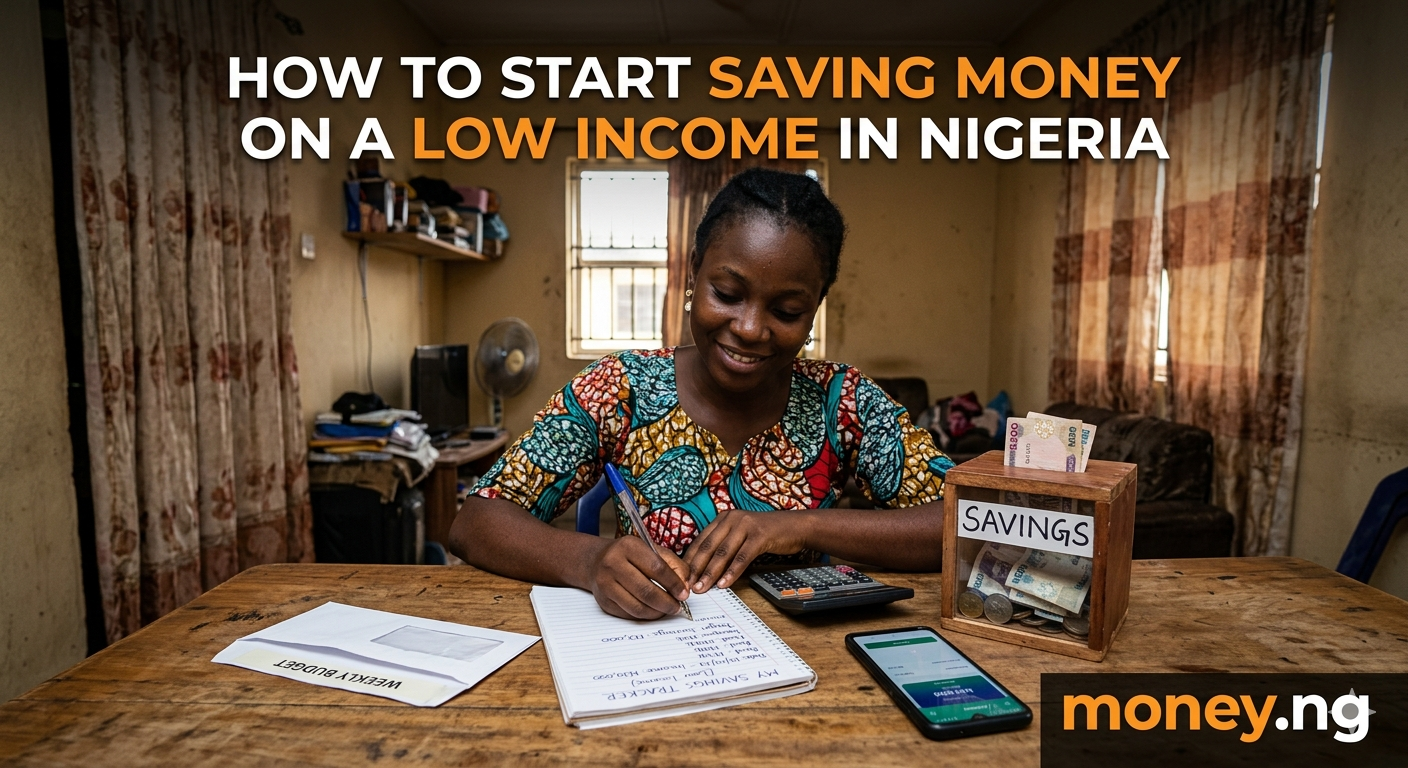
Saving money in Nigeria when your income barely covers rent, food, transport, and family obligations feels almost impossible. With inflation still biting into purchasing power in 2026, many Nigerians find themselves at the end of the month with nothing left. But here is the truth: saving is less about income level and more about systems, habits, and the right tools. This guide is designed specifically for Nigerians starting from little or nothing, with practical, actionable strategies that work in the real Nigerian economy.
Why Saving on a Low Income Is Hard in Nigeria (And Why It’s Still Possible)
Several factors make saving especially difficult in Nigeria: irregular income for millions who are self-employed or work in the informal economy, the “black tax” the cultural expectation that those with income support extended family members, high and volatile prices for food, fuel, and utilities, and the absence of a credit safety net that forces people to spend more upfront on bulk goods. Acknowledging these realities is important because any savings strategy that ignores them will fail in the real world.
The good news is that millions of Nigerians are saving successfully despite these constraints through automation, discipline, and community. The strategies below are rooted in what actually works.
Step-by-Step: How to Save Money on a Low Income in Nigeria
Step 1: Know Your Numbers — Track Every Naira
You cannot save what you cannot see. Before you can cut spending or set savings targets, you need a clear picture of where your money goes. For one week, write down every single expense from bus fare to a bottle of water, from airtime to data to eba and soup. Most people who do this exercise are genuinely shocked by how much they spend on small, invisible items.
Free tools to track expenses include the Kuda Bank app, which automatically categorises digital transactions, Expensure, which allows manual cash logging, and a simple paper notebook if you prefer. The method matters less than the consistency track for at least two weeks before concluding.
👉 Related: Best Budgeting Apps Nigerians Can Use to Manage Money in 2026
👉 Related: Mobile Banking vs USSD in Nigeria: Which Is Safer and Cheaper?
Step 2: Build a Realistic Budget Using the 50/30/20 Rule (Adapted)
The classic 50/30/20 budget allocates 50% of income to needs, 30% to wants, and 20% to savings. For low-income earners in Nigeria, a more realistic starting adaptation might be 70% needs, 10% wants, and 20% savings or even 80/10/10 if circumstances demand it. The critical insight is this: pay yourself first. Before you spend anything, immediately move your savings allocation to a separate account or savings app. What remains is what you live on. If you wait to save what is left at the end of the month, there will never be anything left.
👉 Related: How Nigerians Can Build an Emergency Fund Without Earning Much
Step 3: Automate Your Savings
Automation removes willpower from the equation. Instead of deciding every month whether to save, the money moves automatically before you can spend it. PiggyVest’s AutoSave feature does exactly this: you set a daily, weekly, or monthly amount, and the app automatically debits your linked account at the set time. Kuda’s Spend and Save feature automatically moves a percentage of every transaction you make into a savings pot.
The psychological power of automation cannot be overstated. Studies consistently show that people who automate savings save significantly more over time than those who rely on manual transfers.
👉 Related: Best Savings Apps in Nigeria (2026 Review)
👉 Related: How Much Interest Do Nigerian Savings Apps Really Pay?
Step 4: Use a Dedicated Savings App (Not Your Regular Bank Account)
Keeping savings in the same account as spending money is one of the most common reasons Nigerians fail to save. The money is too accessible, and any unexpected expense or social obligation immediately depletes it. Using a separate, slightly inaccessible savings account creates the friction that protects your savings from impulse spending.
Best savings apps for low-income Nigerians in 2026:
PiggyVest: Nigeria’s most trusted savings app, with a minimum deposit of just ₦100. Its SafeLock feature locks your money until a date you choose; you literally cannot access it before then. This is ideal for those who know they would otherwise spend the money. PiggyVest also offers interest on saved funds.
Cowrywise: Takes a more investment-focused approach to savings, automating contributions into money market funds and other instruments. It is particularly suited for those who want their savings to grow faster than a regular savings account interest rate.
Kuda Bank: Offers multiple savings goals and pockets within the same app, so you can separate rent savings from emergency fund from phone upgrade savings while keeping everything accessible in one place.
OPay OWealth: Offers up to 15% per annum on flexible savings up to ₦100,000, credited daily. For very small regular savers, this is one of the highest-yielding accessible savings options in Nigeria.
👉 Related: Best Digital Banks in Nigeria (2026 Review)
Step 5: Build an Emergency Fund First
Before saving for any specific goal, travel, gadget, or investment, build an emergency fund. An emergency fund is 3–6 months of your basic living expenses kept in a liquid, accessible account. In a country without robust social safety nets, an emergency fund is your personal insurance against job loss, medical crisis, or unexpected family obligations. Without it, any financial setback wipes out all other savings progress.
Start with a small target of ₦50,000 as your first emergency fund milestone, then ₦100,000, then three months of expenses. Use PiggyVest’s Target Savings or a Kuda savings pocket labelled Emergency to build this systematically.
👉 Related: How Nigerians Can Build an Emergency Fund Without Earning Much
Step 6: Cut the Biggest Spending Leaks
Once you can see your spending patterns from Step 1, identify the two or three largest non-essential spending categories and reduce them. Common spending leaks for Nigerians include excessive airtime and data top-ups, consider switching to a cheaper data plan or VTU reselling to buy data at wholesale prices, eating out or ordering food delivery daily, impulse purchases through Instagram and TikTok shop ads, and unnecessary subscriptions that are rarely used.
You do not have to eliminate enjoyment from your life, but making deliberate trade-offs is what separates those who save from those who do not.
👉 Related: Hidden Bank Charges Nigerians Pay Without Knowing
Step 7: Plan for “Black Tax” and Family Obligations
One of the most financially damaging realities for young working Nigerians is unplanned family demands, such as a parent needing hospital fees, a sibling’s school fees, or an uncle’s transport fare. These are real obligations that cannot simply be budgeted away. The solution is to budget for them explicitly. Set a monthly family support line in your budget, even if it is ₦10,000 or ₦20,000 and treat it as a fixed expense, not a variable one. When you have contributed your budgeted amount, your financial obligations for the month are met. This boundary, though difficult to maintain, is critical for your long-term financial health.
Step 8: Reduce Food Costs Without Sacrificing Nutrition
Food is the largest variable expense for most Nigerian households. Practical ways to reduce food costs include buying staples rice, beans, garri, yam in bulk at the beginning of the month rather than in small quantities throughout the month which consistently costs more, cooking in batches and freezing, shopping at open markets rather than supermarkets for fresh produce, and growing a small container herb garden at home onions, peppers, tomatoes to reduce daily small purchases.
Step 9: Find Small Ways to Earn More
There is a limit to how much you can save on a very low income. There are only so many expenses to cut before you hit irreducible basic needs. At some point, the only way to save significantly more is to earn more. Even a ₦20,000 monthly side hustle selling homemade food, offering a skill service, or doing VTU reselling meaningfully increases your savings capacity.
👉 Related: Best Side Hustles in Nigeria That Pay Online (2026)
👉 Related: How Nigerians Can Receive Foreign Payments Without Issues
Step 10: Celebrate Progress and Stay Consistent
Saving on a low income is genuinely difficult and genuinely worth celebrating. Every ₦10,000 saved is a victory. Track your savings milestones, review your budget monthly, and adjust as your income or expenses change. Consistency over months and years, not perfection month to month, is what builds wealth.
A Realistic Savings Plan for a Nigerian on ₦80,000/Month
Monthly income: ₦80,000. Needs rent contribution, food, transport, and utilities ₦56,000 (70%). Family support ₦8,000 (10%). Savings target ₦16,000 (20%). Broken down, this means saving approximately ₦533 per day, slightly more than the cost of a bottle of soft drink. Automated daily into PiggyVest’s SafeLock, ₦16,000 monthly becomes ₦192,000 in a year. That is a meaningful emergency fund, a viable investment seed, or a school fees contribution built entirely from a modest income.
Frequently Asked Questions (FAQ)
Can I really save money on a very low income in Nigeria?
Yes. While it is challenging, consistent small savings combined with discipline and automation can build meaningful financial reserves over time.
What is the best savings app for low-income earners?
PiggyVest, Cowrywise, Kuda, and OPay OWealth are among the best options depending on your goals.
How much should I save monthly?
Start with 10% to 20% of your income if possible. If that is too difficult, begin with any small amount and increase gradually.
Should I save or invest first?
Start with saving especially building an emergency fund before moving into investments.
How do I stay consistent with saving?
Automate your savings, track your progress, and treat savings like a fixed monthly expense.
Conclusion
Saving money on a low income in Nigeria requires more intentionality than saving on a high income but it is entirely possible. Start by tracking your spending, automate your savings before spending anything, use separate accounts for different goals, and plan explicitly for family obligations. The naira you save today, protected in a savings app earning interest, is the financial cushion that will make your 2027 meaningfully different from your 2026.
Disclaimer: This article is for informational purposes only. Financial advice should be sought from a qualified professional for complex personal situations.